

Scleral Lens Care and Handling
A critical part of patient success with scleral lenses is care and handling. Teaching the patient proper techniques and solution use is imperative to reducing issues before they arise. Proper staff training and, in turn, proper patient education create a baseline for good habits and lens wear success.
We will also include, in this newsletter, a few generic documents to help improve patient success. These documents will help the patient to stay on track with their solutions and create good habits. These documents can be personalized to your practice.
Below are some basic care and solution instructions to utilize for education.
Care and Solutions
Inspection:
Visually inspect lens for any signs of damage such as, but not limited to cracks, chips or breaks. If damage is discovered, discard the lens immediately.
Cleaning:
For cleaning, place the lens, front side down, in the palm of the hand and apply several drops of the multipurpose solution or non-abrasive daily cleaner. Using the ring finger of the other hand, apply slight pressure in a swirling motion for the time recommended by the manufacturer, usually 20-30 seconds. Rinse lens with a clear stream of solution for 5 seconds. Note: Do not clean the lens by rubbing it between the thumb and index fingers, as this may cause lens warpage.
Patient Lens Care and Disinfection Process:
Inspect lenses for damage:
- Visually inspect lens for any signs of damage
- Physically inspect lens for signs of damage
Care and handling for multipurpose GP solution:
- Remove lens from eye as directed by practitioner
- Place lens in palm of hand adding a few drops of non-abrasive daily cleaner or multipurpose GP lens care solution
- Rub the lens with non-abrasive daily cleaner or multipurpose GP lens care solution for 20-30 seconds and rinse with a clear stream of saline for 5 seconds
- Place lens in clean case and cover with fresh multipurpose GP lens care solution
- Replace cap and store
- Place lens in holding area for 4-6 hours to complete disinfection process as per solution manufacturer’s recommendations
- Remove lens from case and condition surface with GP multipurpose solution
- Rinse lens prior to insertion with non-preserved saline
- Lens is now ready for insertion process
Care and handling for hydrogen peroxide solution:
- Remove lens from eye as directed by practitioner
- Place lens in palm of hand adding a few drops of non-abrasive daily cleaner or multipurpose GP lens care solution.
- Rub the lens with non-abrasive daily cleaner or multipurpose GP lens care solution for 20-30 seconds and rinse with a clear stream of saline for 5 seconds
- Place lens in flip-up lens holder with disk attached
- Fill container with hydrogen peroxide solution
- Replace holder into container and screw lid down tightly
- Place container in holding area for 6 hours to complete disinfection process, as per solution manufacturer’s recommendations. Do not tip container on side.
- After 6-hour or more disinfection process, remove lens from case and rinse with saline- do not rinse with hydrogen peroxide solution or tap water
- Condition surface with GP multipurpose solution
- Rinse lens prior to insertion with non-preserved saline
- Lens is now ready for insertion process
Solutions for Scleral lenses
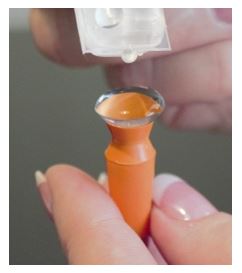
All scleral lenses should be rinsed and filled with non-preserved saline prior to application. Here are some of the approved products available for filling and rinsing:
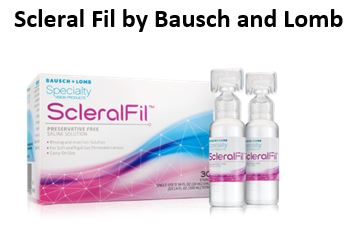
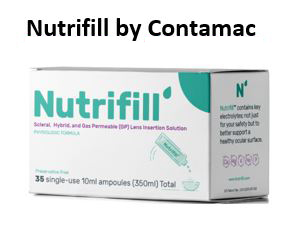
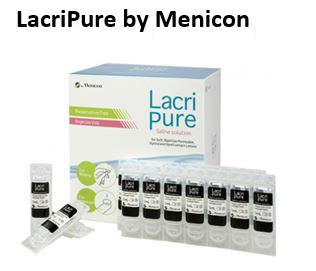
All of these products are available for purchase from ABB Optical Group.
Some practitioners utilize a saline product intended for use in nebulizers. This product is not approved for use with contact lenses but can be utilized in an “off label” capacity.
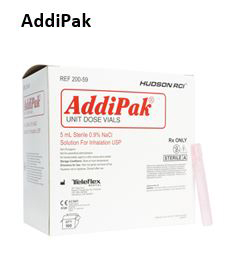
Be sure to fill the lens completely with a non-preserved saline before application.
Solutions for Scleral Lens Care after Removal:
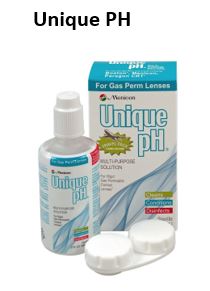
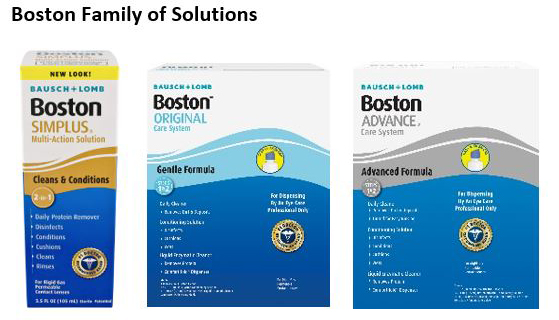
There are two ways to care for scleral lenses, either using hydrogen peroxide or multipurpose gas permeable solutions for disinfection. Both processes do a broad-spectrum disinfection; however only the multipurpose solutions condition the lens surface.
Hydrogen Peroxide Solutions:
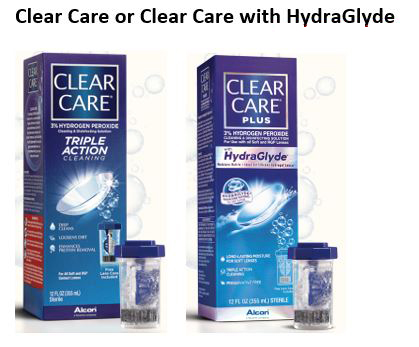
Can be used with Tangible Hydra-PEG treated lenses.
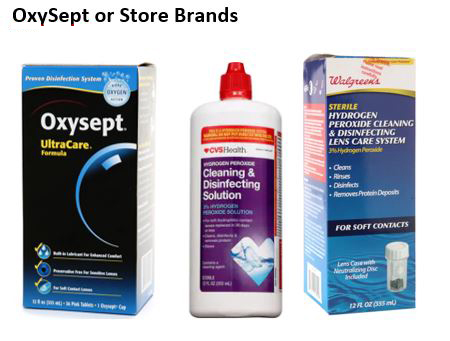
Hydrogen Peroxide Solutions:
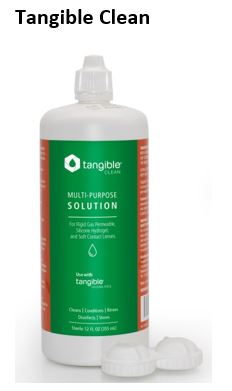
Can be used with Tangible Hydra-PEG treated lenses.
Can be used with Tangible Hydra-PEG treated lenses.
Rewetting Drops:
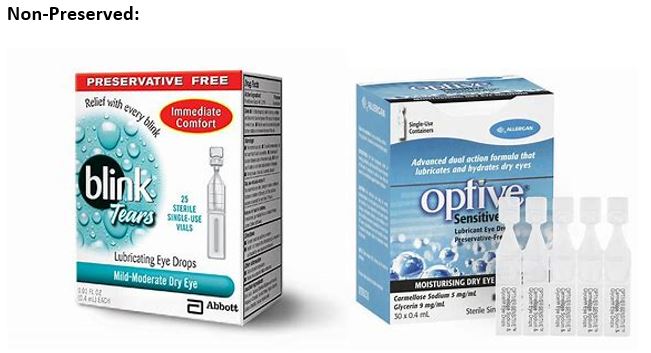
Can be used with Tangible Hydra-PEG treated lenses.
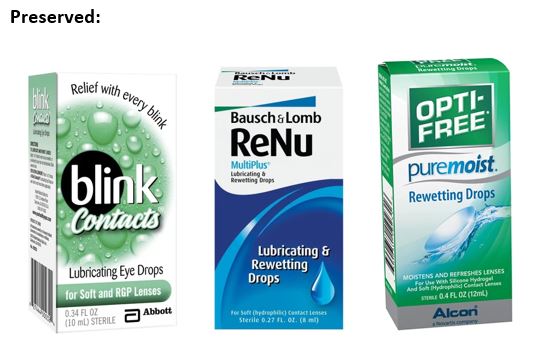
Can be used with Tangible Hydra-PEG treated lenses.
Special Care for Lenses treated with Tangible Hydra-PEG
Do not use:
- Tap water
- Abrasive cleaners
- Boston Advance Cleaner
- Alcohol based cleaners
- MiraFlow (and equivalents)
- Others
- Boston One Step Liquid Enzymatic Cleaner
- Optimum by Lobob ESC Extra Strength Cleaner
- Progent by Menicon
- SupraClens by Alcon
- Additional tips
- You should never rub the lenses with a dry tissue or cloth.
- These are often very abrasive at a surface level and can damage the Tangible Hydra-PEG™ coating
- Lenses should not be stored dry, but always in a contact lens care solution, according to the instructions on the packaging of that solution
- You should never rub the lenses with a dry tissue or cloth.



Other News
Troubleshooting Tips for Ortho-K
Here’s a few tips to help the consultant determine what changes should be made for specific situations.
Getting Started with Ortho-K
When establishing a vendor relationship with a orthokeratology manufacturer, there are several important factors to consider.
Application and Removal of Ortho-K Lenses
Proper application, removal, and hygiene are instrumental in the patient's long-term success with orthokeratology.